

Small Living Room Decorating Ideas That Make a Big Difference
A small living room can be comfortable, stylish and practical when every design choice serves a purpose. The right furniture arrangement, thoughtful lighting, well-chosen colours and clever storage solutions can make a noticeable difference without requiring expensive renovations or a complete furniture replacement.
The best small living room decorating ideas focus on how the room looks and functions together. Instead of filling every corner with decorations, choose pieces that improve comfort, support everyday activities and create a sense of openness.
Whether you live in a compact apartment, a small family home or a rental property, these ideas can help you make better use of your available space while keeping your living room warm and inviting.
1. Choose Furniture That Fits Your Living Room

Furniture has a major influence on how spacious a living room feels. A large sofa with thick arms, a bulky coffee table and several oversized chairs can leave little room for movement.
However, choosing the smallest furniture available is not always the best solution. Furniture should be comfortable enough for everyday use while leaving sufficient space to walk around it.
Measure Before Buying Furniture
Start by measuring the room’s length and width. Record the positions of doors, windows, electrical outlets and other fixed features. Then measure any furniture you already own.
Before purchasing a new sofa or table, consider:
- Width and depth: Check that the furniture fits without blocking important walkways.
- Height: Lower-profile furniture may help maintain an open view across the room.
- Leg design: Exposed legs can reveal more floor area and make some furniture appear visually lighter.
- Practical use: Consider how many people regularly use the room and what activities take place there.
For example, a compact two-seater sofa with narrow arms may provide more usable seating space than a bulky three-seater. A slim side table can replace a large cabinet when you only need somewhere to place a lamp and a drink.
Avoid Buying Too Many Small Pieces
Several small chairs, stools and tables can create just as much visual clutter as one oversized piece of furniture.
Choose a few useful items that work well together. A comfortable sofa, one occasional chair and a compact table may be enough for a simple seating arrangement.
2. Use Light Colours to Create an Open Feel

Colour can change the visual character of a room. Light shades often help a small living room feel brighter, particularly when natural daylight is limited.
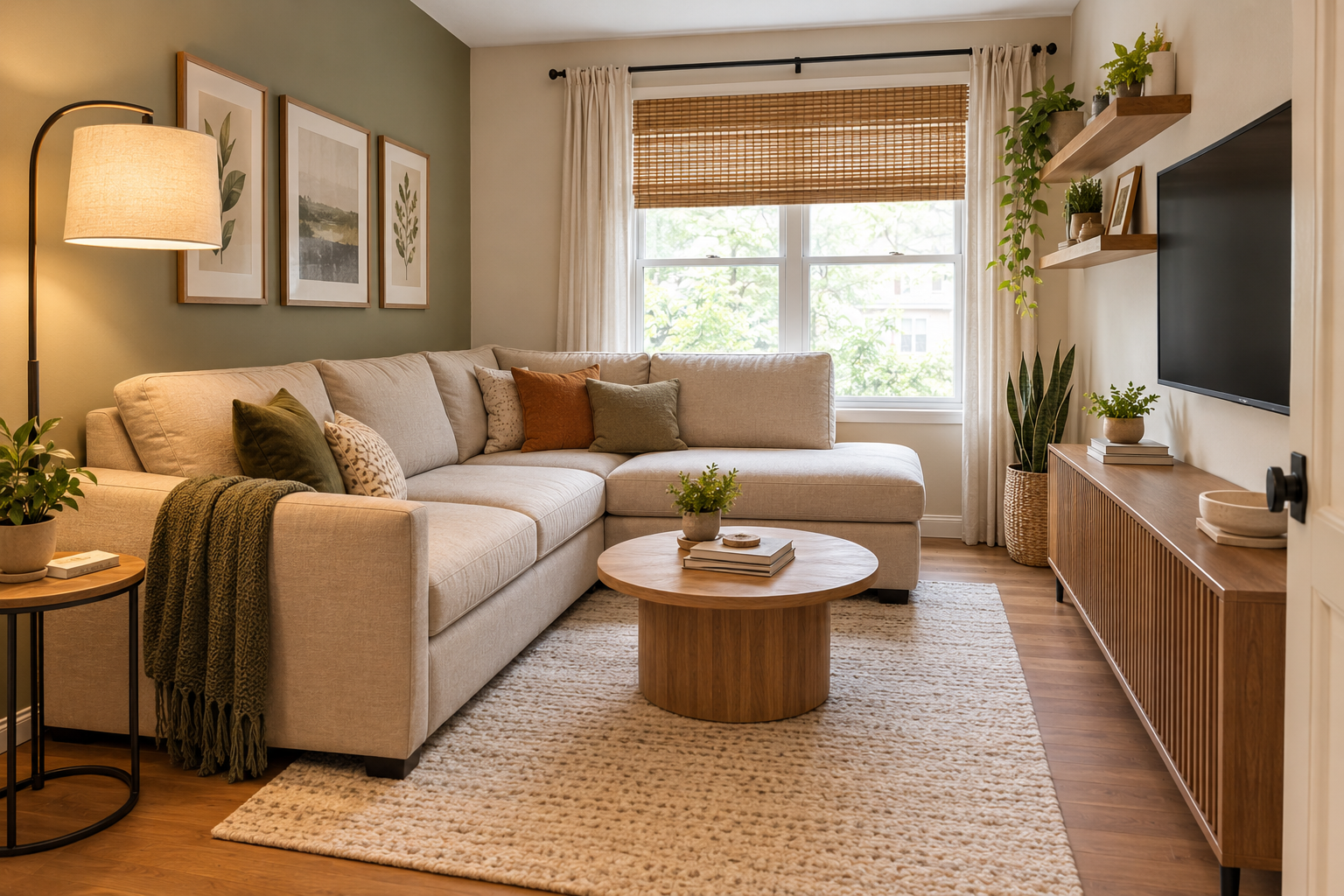
White, ivory, warm beige, pale grey and soft sage are versatile options for walls and larger furnishings. They can create a calm background for artwork, cushions and other decorative details.
Build a Balanced Colour Palette
Rather than choosing a different colour for every surface, begin with two or three complementary shades.
A simple palette might include:
- Main colour: Warm white or soft beige for the walls.
- Supporting colour: Natural wood, muted grey or a gentle green.
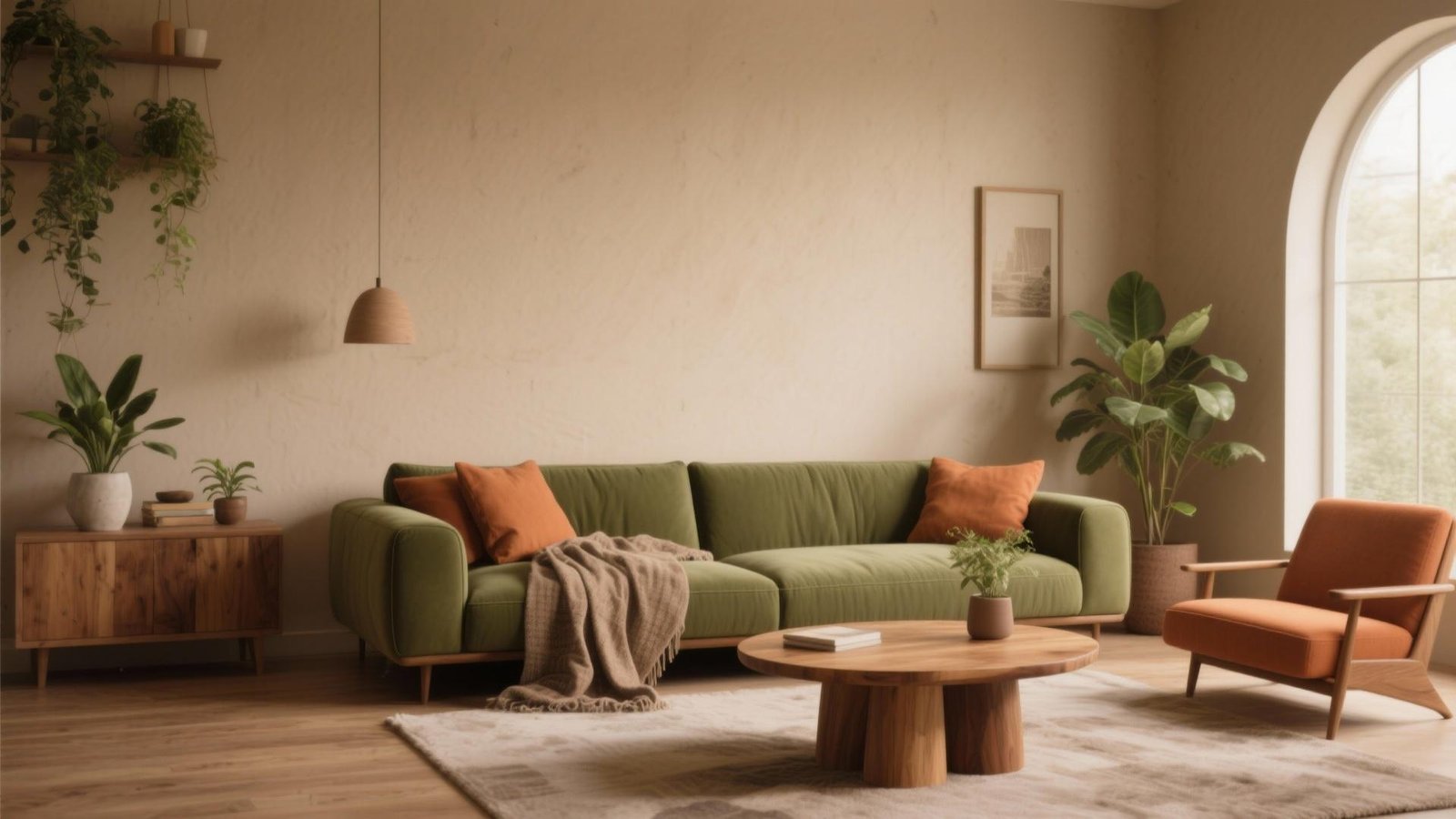
- Accent colour: Terracotta, navy blue, mustard or another favourite shade for smaller accessories.
This approach creates visual consistency without making the room feel plain.
Can Dark Colours Work in a Small Living Room?
Yes. Dark colours can add depth, character and contrast. A deep green accent wall, charcoal cushions or a navy armchair can look attractive in a compact space.
The important consideration is balance. If the room has limited natural light, using dark shades on every wall and on most large furnishings may make it feel enclosed.
Try introducing darker colours through artwork, cushions or a single feature wall before committing to a complete colour change.
Practical tip: Test paint samples in different parts of the room. Colours can look different in morning daylight, afternoon sunlight and artificial lighting.
3. Make Better Use of Natural Light

Natural light can make a living room feel more welcoming and visually open. Even if you cannot increase the number or size of your windows, you can make better use of the daylight already available.
Choose Lightweight Window Treatments
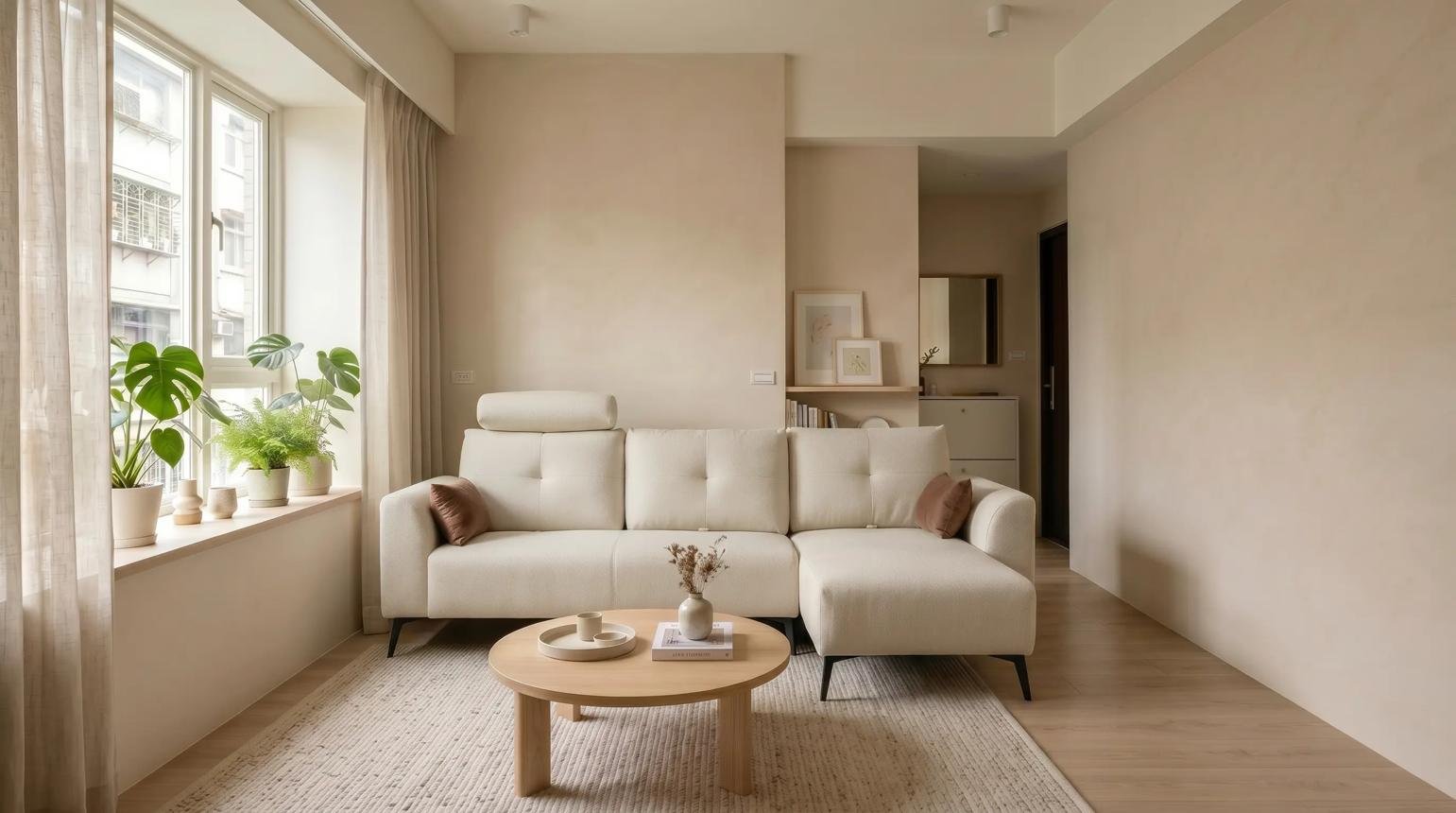
Heavy curtains can block daylight when they remain closed. Sheer curtains, lightweight linen-look panels and simple blinds allow you to control privacy while keeping the room bright.
If you prefer full-length curtains, hanging the curtain rod a little above the window frame can draw the eye upward. Extending the rod beyond the frame may also allow the curtains to sit away from the glass when open.
Check that the treatment suits your window size and privacy needs.
Keep Windows Visually Unobstructed
Avoid placing tall furniture directly in front of the main window unless the layout requires it. Keep windowsills relatively clear and choose accessories that do not interfere with opening the windows.
For rental homes, lightweight curtains and removable window treatments can be useful alternatives to permanent changes.
4. Add Mirrors to Reflect Light and Create Depth

Mirrors are among the most versatile small living room decorating ideas because they reflect existing light and portions of the room. This can create a greater sense of depth without changing the room’s actual dimensions.
Where Should You Place a Mirror?
Consider these options:
- Near a window: A mirror positioned to reflect daylight can help brighten a darker section of the room.
- Above a console table: This arrangement creates a decorative focal point while keeping the floor clear.
- On a narrow wall: A well-proportioned mirror can make a confined area feel less closed in.
- Opposite an attractive feature: Reflecting greenery, artwork or an appealing view adds visual interest.
Think about what the mirror will reflect before hanging it. Reflecting a cluttered shelf or an unattractive corner may draw more attention to the problem rather than improve the room.
Choose the Right Mirror Size
A medium or large mirror can make a stronger visual statement than several tiny mirrors scattered around the walls.
Select a size that complements the furniture beneath it and secure the mirror using suitable wall fixings. If you cannot drill into the wall, consider a lightweight, safely positioned alternative.
Remember that a mirror creates an impression of space; it does not physically increase the room’s size.
5. Improve the Furniture Layout

One of the most effective ways to improve a small living room is to rearrange the furniture you already have.
A room can feel cramped because furniture blocks the natural route between the entrance, seating area and other parts of the home. A thoughtful layout addresses these problems before you spend money on new decorations.
Start With the Main Focal Point
Identify the feature that should anchor the room. It might be a television, fireplace, large window or favourite piece of artwork.
Position the main seating so that it works with that feature without blocking entrances or windows.
Keep Walking Routes Clear
People should be able to enter the room, reach the seating and move towards adjoining spaces without repeatedly stepping around furniture.
If the room is especially narrow, arrange the larger furniture along its length and use compact tables or occasional chairs to avoid obstructing the main path.
Should You Push Every Piece Against the Wall?
Not necessarily. Placing furniture against the walls can work well in a very small room, but it is not a universal rule.
In some layouts, moving a sofa slightly away from the wall creates a more balanced seating area. In others, keeping it close to the wall preserves valuable floor space.
Test different arrangements before deciding. Even a small adjustment can improve the way people move through the room.
6. Choose Space-Saving and Multifunctional Furniture

Multifunctional furniture is particularly useful when a living room needs to support several activities. A single item that serves two purposes can reduce the number of separate pieces required.
| Furniture type | Main benefit | Best suited for |
|---|---|---|
| Storage ottoman | Provides a footrest, occasional seat and concealed storage | Rooms with limited cupboard space |
| Nesting tables | Offer extra surfaces when needed and tuck away afterwards | Compact seating areas |
| Lift-top coffee table | Provides a work surface or storage, depending on the model | Living rooms used for occasional laptop work |
| Slim console table | Adds a surface without occupying much depth | Narrow spaces behind or beside seating |
| Storage bench | Combines seating with space for everyday items | Rooms with an unused wall or entry corner |
| Wall-mounted shelf | Stores books and displays accessories above floor level | Rooms with limited floor space |
Prioritise Furniture You Will Actually Use
A multifunctional item is only worthwhile if its extra features suit your routine.
For example, a storage ottoman may be useful for keeping blankets and remote controls out of sight. However, if you need a firm surface for meals or frequent work, a stable table may be more practical.
Measure the item when fully opened, extended or in use. A folding table may fit neatly against a wall but still need enough clearance to accommodate chairs.
7. Use Vertical Space for Storage and Decoration

When floor space is limited, the walls can provide valuable storage and display opportunities.
Vertical storage keeps frequently used belongings organised while leaving more room for movement. It can also draw attention upward, helping the room feel taller.
Install Floating Shelves
Floating shelves work well for books, framed photographs, small plants and a few decorative objects.
Keep the arrangement selective. Filling every shelf with unrelated items can create a crowded appearance, especially in a room that already contains patterned furniture or colourful artwork.
Use appropriate wall fixings and respect the manufacturer’s weight limits.
Consider a Narrow Bookcase
A tall, narrow bookcase may offer useful storage without taking up as much floor area as a wide cabinet.
Place heavier objects on lower shelves and use upper shelves for lighter belongings. Secure tall furniture to the wall where appropriate, following the manufacturer’s safety instructions.
Make Wall Decor More Intentional
Instead of covering every available wall, select one area for a gallery wall, a large print or a statement clock.
A deliberate arrangement creates a focal point and reduces the need for numerous smaller decorations throughout the room.
8. Layer Your Living Room Lighting

Lighting affects how a living room looks and how comfortably you can use it. A single ceiling light may provide general illumination but leave reading corners and other areas feeling flat or shadowy.
A more flexible approach combines several types of lighting.
Ambient Lighting
Ambient lighting provides the room’s general illumination. It may come from a ceiling fixture, pendant light or appropriately placed wall lights.
Choose a fixture that suits the room’s proportions. A very large pendant can dominate a low ceiling, while an undersized light may not provide enough illumination.
Task Lighting
Task lighting supports specific activities such as reading, writing or working.
A table lamp beside the sofa or a suitable wall-mounted reading light can provide focused illumination without requiring another floor-standing piece of furniture.
Accent Lighting
Accent lighting highlights artwork, shelves or architectural details.
A small lamp on a console table can also add warmth to a darker corner and create a more relaxed atmosphere in the evening.
A simple lighting plan: Use one general light source, one reading or task light and one softer accent light where space and electrical access allow. You do not need several lamps if one or two well-positioned lights meet your needs.
9. Use an Area Rug to Define the Seating Zone
An area rug can visually connect the sofa, coffee table and chairs, making the seating arrangement feel intentional.
The right rug also introduces texture, colour and comfort underfoot.
Choose a Suitable Rug Size
A rug that is too small may look disconnected from the furniture. If possible, choose one large enough for at least the front legs of the main seating pieces to rest on it.
However, the best size depends on the room’s shape and the available walking space. Do not purchase a rug so large that it interferes with doors or makes furniture placement awkward.
Select Patterns Carefully
Small living rooms can accommodate patterns, but the design should complement the rest of the space.
- Subtle geometric patterns can add interest without dominating the room.
- Textured solid-colour rugs can introduce depth while keeping the overall look calm.
- A bold patterned rug works best when its colours coordinate with the sofa, curtains or cushions.
Choose a rug with a suitable backing or use an appropriate non-slip underlay to help prevent movement.
10. Decorate With Cushions, Throws and Texture

A small living room does not need to be plain to look spacious. Texture and carefully selected accessories can make it feel comfortable and personal without adding bulky furniture.
Mix Textures Instead of Adding More Objects
Combine materials such as cotton, linen, wool-look fabrics, timber, woven baskets and ceramic accessories.
For example, a plain sofa can gain character through two or three complementary cushions, a soft throw and a textured rug.
The variation makes the room interesting without requiring numerous decorative objects.
Use One or Two Accent Colours
Choose a limited set of accent colours and repeat them in different places.
If you use muted green cushions, for example, you could introduce a similar shade through a plant pot or a small artwork. This creates a visual connection across the room.
Display Personal Items Selectively
Family photographs, books, souvenirs and handmade decorations can give a living room personality.
Rather than displaying everything at once, group a few meaningful objects together and store the rest until you want to rotate the display.
This keeps the room personal without sacrificing useful surfaces.
11. Bring Nature Into the Room
Plants can introduce colour, texture and a sense of freshness to a small living room.
You do not need a collection of large floor plants to achieve this effect. One well-positioned plant and a smaller plant on a shelf or table may be enough.
Choose Plants for Your Conditions
Consider the amount of daylight, your watering routine and the available space before selecting plants.
A compact tabletop plant may be suitable for a bright shelf, while a taller plant could fill an otherwise unused corner. Choose varieties according to their actual light and care requirements rather than appearance alone.
If the room receives little natural light, consider a good-quality artificial plant or a design feature inspired by nature.
Avoid Blocking Useful Space
Place plants where they do not obstruct walkways, window operation or frequently used surfaces.
Use stable pots and suitable trays to protect furniture and flooring from moisture.
12. Make a Small Living Room Look Taller

When a room has a low ceiling or limited wall space, decorating vertically can help change how its proportions are perceived.
Hang Curtains Higher
Positioning curtain rods above the window frame can draw the eye upward. Longer curtains can reinforce the vertical lines, provided they suit the window and do not create a tripping hazard.
Choose Tall Artwork or Vertical Displays
A tall framed print, a narrow bookcase or a vertically arranged collection of photographs can direct attention towards the ceiling.
Keep the scale appropriate. One well-positioned piece often creates a cleaner effect than several unrelated decorations competing for attention.
Keep the Upper Walls Relatively Uncluttered
Decorating every section of the wall can make the room feel busy.
Leave some areas empty so that the important features, such as the artwork, curtains or shelving, have room to stand out.
13. Create Separate Zones in a Small Multifunctional Room

Many living rooms need to do more than provide seating. They may also serve as dining areas, occasional workspaces or places for children’s activities.
The key is to give each activity a clear place without dividing the room into cramped sections.
Use Furniture to Define Areas
A sofa can separate the main seating zone from a dining area when positioned appropriately. A small rug can identify the lounge area, while a compact table can establish a separate work or dining space.
Avoid adding dividers that block daylight or interrupt the main walking route.
Choose Flexible Pieces
A folding dining table, nesting stools or a lightweight occasional chair can be moved when additional space is needed.
Keep frequently used items within easy reach and store less frequently used belongings elsewhere if possible.
Keep Each Zone Connected
Use related colours, materials or finishes across the room so that the different areas feel like parts of one home.
For example, a timber coffee table and a dining table with similar wood tones can visually connect the lounge and dining zones.
14. Decorate a Small Living Room on a Budget

You can make a noticeable difference to a small living room without replacing all your furniture. In many cases, rearranging existing items and improving organisation will have a greater impact than buying more decorations.
Try these affordable changes first.
Rearrange What You Already Own
Move furniture to improve circulation, remove pieces that are rarely used and experiment with different positions for lamps and tables.
Take photographs of the room before and after rearranging it. Comparing the images can help you judge whether the new layout feels more open and balanced.
Refresh Soft Furnishings
New cushion covers, a throw or a second-hand rug can change the room’s colour scheme without requiring new furniture.
Choose items that complement what you already own rather than purchasing each accessory separately without a plan.
Reuse and Repurpose Furniture
A small cabinet from another room might work as a side table. A sturdy basket may hold blankets, while an existing tray can organise accessories on a coffee table.
Check that repurposed furniture is stable and suitable for its new use.
Shop With a List
Before purchasing anything, identify the specific problem you want to solve.
If the room lacks storage, look for a storage solution. If it feels dark, consider lighting or window treatments. If the layout is awkward, test rearranging the furniture first.
This approach reduces unnecessary spending and helps every purchase contribute to a clear goal.
15. Avoid Common Small Living Room Decorating Mistakes
Even attractive furniture and accessories can make a compact room harder to use if they are poorly chosen or arranged.
| Common mistake | Why it can be a problem | A better approach |
|---|---|---|
| Buying an oversized sofa | It may dominate the room and restrict movement | Measure the room and compare furniture dimensions |
| Choosing a rug that is too small | The seating arrangement may look disconnected | Select a rug that relates to the main furniture group |
| Relying on one ceiling light | Corners may feel dim or the lighting may seem harsh | Add suitable task or accent lighting |
| Filling every shelf | Small decorative objects can create visual clutter | Group favourite items and leave some space empty |
| Using too many unrelated colours | The room may feel visually fragmented | Repeat a small number of complementary shades |
| Blocking windows with furniture | Daylight and access may be reduced | Keep the window area as open as the layout allows |
| Buying storage without a plan | Cabinets and baskets can consume valuable floor space | Identify what needs storing before choosing furniture |
| Following every design trend | The room may become expensive and less practical | Prioritise comfort, daily routines and personal taste |
A successful small living room balances openness with comfort. The aim is not to remove everything, but to ensure that the furniture and decorations work together.
16. A Simple Step-by-Step Small Living Room Makeover Plan
If you are unsure where to begin, follow this practical sequence.
Step 1: Measure the room
Record the dimensions, window positions, door swings and existing furniture sizes. Identify the main walking route before making layout changes.
Step 2: Arrange the main furniture
Position the sofa and other essential seating first. Check that people can move comfortably between the entrance and the main seating area.
Step 3: Improve the light
Open window coverings where privacy allows, position lamps where they are useful and consider a mirror that reflects a pleasant view or daylight.
Step 4: Organise storage
Remove unnecessary items from visible surfaces and use shelves, baskets or multifunctional furniture to manage belongings that need to stay in the room.
Step 5: Add finishing touches
Introduce a coordinated rug, a few cushions, artwork or a plant. Stop when the room feels comfortable and functional rather than adding accessories to fill every empty space.
You can complete these steps gradually. Start with free changes, assess the result and spend money only where a genuine need remains.
Frequently Asked Questions
1. How can I make a small living room look bigger?
Use a layout that preserves clear walking routes, choose appropriately sized furniture, maximise available daylight and reduce unnecessary clutter. Mirrors, lighter colours and furniture with exposed legs can also create a greater sense of openness. The best combination depends on the room’s proportions and lighting.
2. What colours are best for a small living room?
Warm white, cream, pale grey, soft beige and muted green are versatile options. They can help create a bright, coordinated background. Dark colours can also work as accents or feature colours when balanced with suitable lighting and complementary furnishings.
3. Which furniture is best for a small living room?
Choose furniture that fits the room and supports your everyday activities. Compact sofas, nesting tables, storage ottomans, narrow bookcases and wall-mounted shelves can be useful. Measure each item before buying it and consider how much clearance it needs when in use.
4. How can I decorate a small living room on a low budget?
Begin by rearranging existing furniture and clearing unnecessary items. Refresh the room with cushion covers, a throw, second-hand accessories or artwork you already own. Improve the lighting and organisation before investing in expensive furniture or decorative upgrades.
5. Should I use a large rug in a small living room?
A suitably sized rug can connect the seating area and make the furniture arrangement feel more cohesive. Whenever practical, choose one that extends beneath the front legs of the main seating pieces. Ensure that it does not block doors or interfere with movement.
6. How do I decorate a small living room with limited storage?
Use vertical shelving, narrow cabinets, storage ottomans and baskets that fit the available space. Give everyday items designated places and store occasional-use belongings elsewhere when possible. Avoid adding storage furniture until you know what needs to be stored and where it will fit.
Conclusion
The most effective small living room decorating ideas combine thoughtful furniture placement, useful storage, appropriate lighting and carefully chosen decorative details. You do not need a large budget or a complete renovation to make your room more inviting.
Start by measuring your space, arranging the essential furniture and improving the way natural and artificial light reaches the room. Then introduce colours, textures and accessories that reflect your personal style.
Above all, design around how you actually live. A small living room should offer comfortable seating, practical storage and enough room to move freely. When every element has a clear purpose, even a compact space can feel welcoming, organised and stylish.

Leave a Reply