

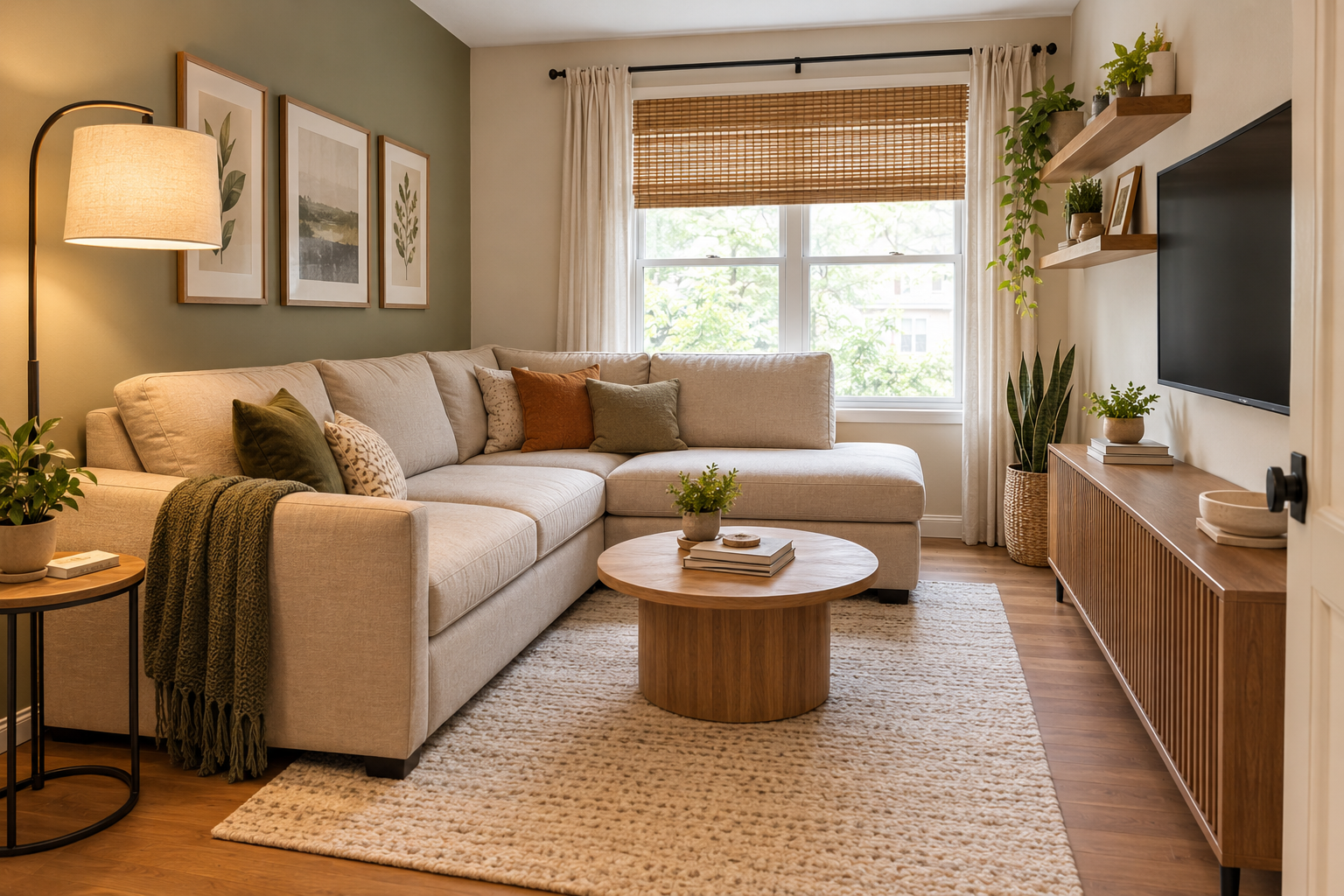
Small Living Room Ideas With a Sectional Sofa
A sectional sofa can make a small living room feel comfortable, inviting, and well organized. It provides several seats in one piece of furniture, making it a useful option for apartments, compact family rooms, and homes where every part of the floor plan matters.
The challenge is finding a sectional that fits without blocking walkways or overwhelming the room. The most effective small living room ideas with a sectional sofa combine thoughtful furniture placement, suitable proportions, practical storage, and a coordinated color palette.
Whether you prefer modern neutral decor, warm natural textures, or a more colorful interior, these ideas will help you create a living room that looks attractive and works for everyday life.
1. Place the Sectional Against the Longest Suitable Wall

Placing the longest side of a sectional against a suitable wall is often a practical starting point. This arrangement can free up the center of the room and leave space for a coffee table, a floor lamp, or a clear walking route.
Before deciding on the wall, consider the room’s doors, windows, outlets, and heating or cooling vents. The longest wall is not always the best choice if the sofa would block access to another part of the home.
For a balanced layout:
- Place the long side of the sofa along a wall with few obstructions.
- Position the chaise toward a corner that does not interrupt the main walkway.
- Keep frequently used doors and windows accessible.
- Use a slim side table if you need a place for a lamp, book, or drink.
Why it works: Concentrating the largest piece of furniture along one side can make the remaining floor area easier to use. It also gives you a natural starting point for arranging the rug and coffee table.
2. Choose a Compact L-Shaped Sectional
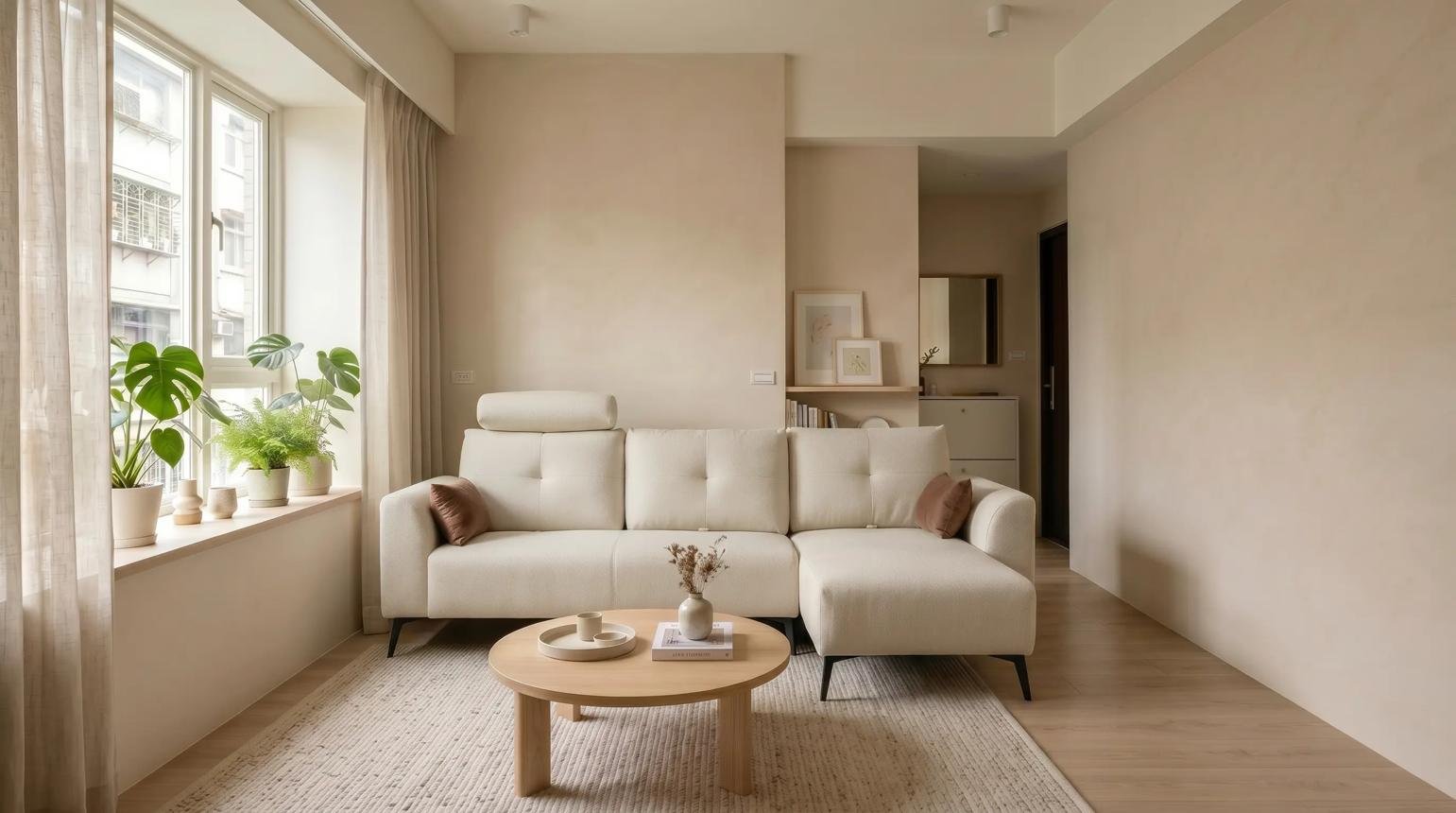
An L-shaped sectional is a useful option for many small living rooms because it provides seating along two sides without wrapping around the entire seating area.
Look for a design with slim arms, a manageable chaise depth, and proportions suited to your room. A sofa with narrow arms may preserve more usable seating width than a bulky model with thick armrests.
However, do not choose a sectional based on appearance alone. Seat depth, back height, and overall length affect both comfort and how much floor space remains.
Consider an L-shaped design if you want:
- A comfortable place to stretch out.
- Seating for family members or guests.
- One main sofa instead of a sofa and loveseat.
- A layout that can fit into a corner.
A large L-shaped sectional can still overwhelm a small room. Compare the complete dimensions with your available floor area before buying.
3. Try a Reversible-Chaise Sectional

A reversible-chaise sectional gives you more flexibility when deciding which side should extend into the room. Depending on the design, you may be able to position the chaise on either the left or right.
This can be particularly helpful if you rent your home, expect to rearrange the furniture, or might move to a different apartment.
Before purchasing, confirm that the chaise is genuinely reversible. Some sectionals have fixed orientations, even when product photographs show different room arrangements.
Think about how you enter the room, where you want the television, and which seats will be used most often. The chaise should provide a comfortable lounging spot without forcing people to walk around the furniture.
Best for: People who want a flexible layout or need furniture that can adapt to different room shapes.
4. Float the Sectional in an Open-Plan Living Area

In an open-plan home, a sectional does not always need to sit against a wall. Positioning it slightly away from the wall can help separate the living area from the kitchen or dining space without adding a physical divider.
A rug can define the seating zone, while a narrow console behind the sofa may provide space for a small lamp or everyday essentials.
This arrangement works best when the room has enough width for people to walk around the sectional. If floating the sofa creates a narrow passage or blocks access to a door, placing it against a wall may be more practical.
For a particularly small open-plan room, avoid adding a large console behind the sofa. The sectional itself may provide enough separation between the living and dining areas.
5. Pair the Sectional With a Round Coffee Table
The coffee table should make the seating area more useful, not harder to navigate.
A round table is worth considering because it has no corners to navigate around. An oval table can also work well in a narrow room, while nesting tables provide flexibility when you occasionally need extra surface space.
Another option is a storage ottoman. It can function as a footrest, occasional seat, and storage compartment, especially when paired with a suitable tray.
| Coffee table type | Best use | Consideration |
|---|---|---|
| Round table | Compact seating areas | Check its diameter and overall footprint |
| Oval table | Narrow living rooms | Make sure its length does not block movement |
| Nesting tables | Flexible everyday use | Store the smaller table when not needed |
| Storage ottoman | Extra storage and lounging | A large ottoman can still take up substantial floor space |
| Small square table | Balanced, compact layouts | Check that its corners do not obstruct the route around the sofa |
Measure the space between the sectional and the table before buying. A commonly used starting point is approximately 14–18 inches, but comfort and clearance depend on the furniture dimensions and how people move through the room.
6. Use Warm Neutrals to Create a Cohesive Look

A coordinated color palette helps a small living room feel intentional. Cream, beige, warm white, and light gray are versatile choices because they can work with many flooring types and decor styles.
You do not need to make everything the same color. Introduce contrast through cushions, throws, artwork, plants, and wood finishes.
Here are several combinations to consider:
| Sectional color | Colors to pair with it | Decorating style |
|---|---|---|
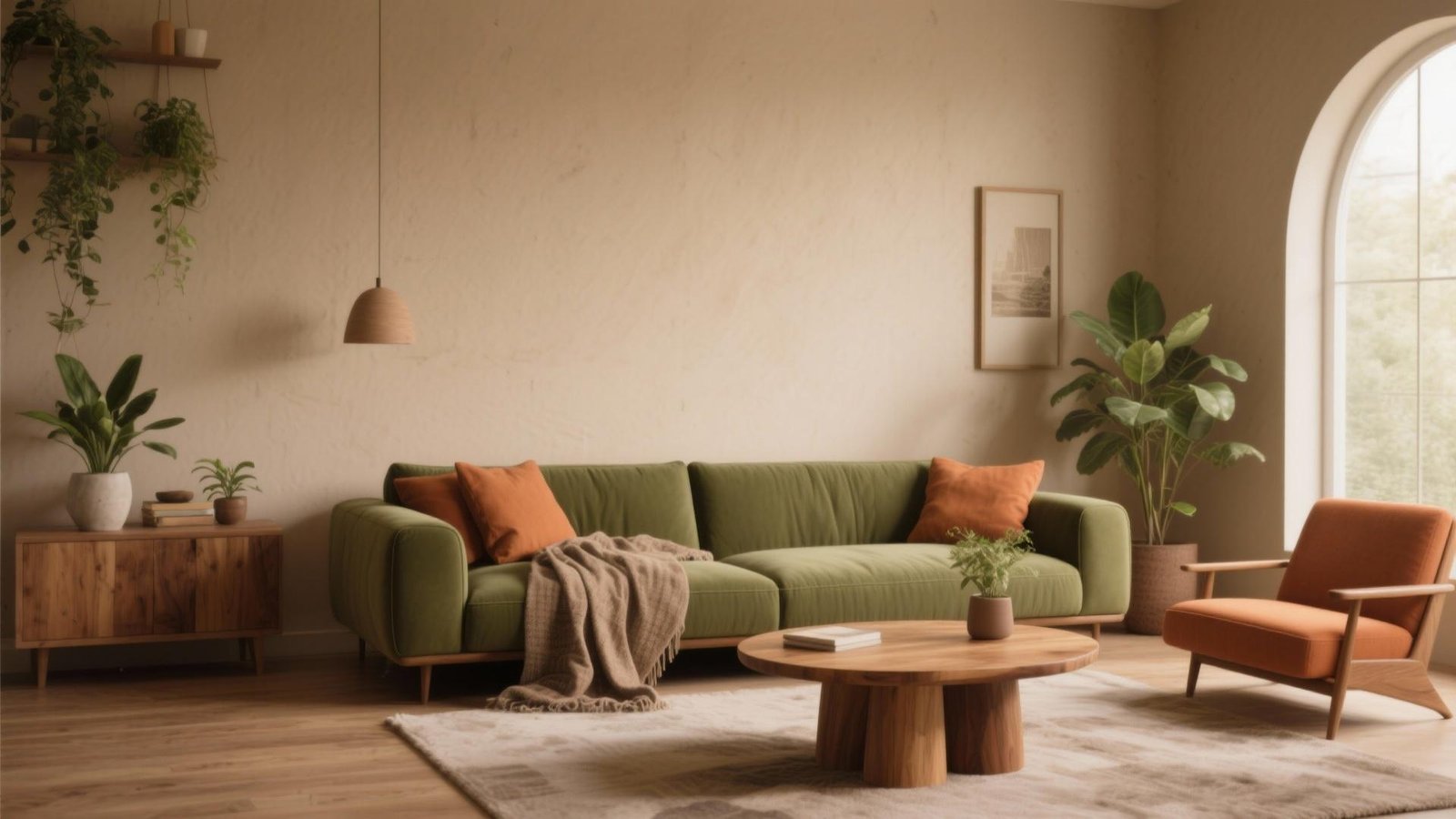
| Cream | Olive green, warm white, oak | Natural and relaxed |
| Beige | Terracotta, ivory, walnut | Warm and earthy |
| Light gray | Muted blue, cream, pale wood | Fresh and contemporary |
| Charcoal | Soft white, natural wood, muted green | Modern and defined |
| Sage green | Beige, ivory, light oak | Calm and nature-inspired |
| Deep blue | Warm beige, cream, brass accents | Rich and sophisticated |
A dark sectional can also work in a small living room. Balance it with lighter walls, appropriate lighting, and a rug that connects the furniture without making the room feel visually heavy.
Practical tip: Test fabric and paint samples in the room’s actual lighting. Colors can look different in daylight, under warm lamps, and beside existing flooring.
7. Use an Area Rug to Connect the Furniture

A rug helps connect the sectional, coffee table, and nearby seating into one visual arrangement. Without one, furniture can appear scattered across the floor.
Rather than choosing a rug based only on the empty space in front of the sofa, consider the whole seating arrangement. A useful starting point is to place the front legs of the sectional on the rug, provided it fits without interfering with doorways or other furniture.
Keep these points in mind:
- A rug that is too small may make the seating area look disconnected.
- A very large rug may interfere with doors or leave awkward edges.
- A subtle pattern can add interest without competing with the sofa.
- A textured neutral rug can bring warmth to a room with simple furniture.
Measure the rug area before purchasing it. The aim is to visually connect the main pieces while preserving a practical route around them.
8. Make Better Use of Wall Space

When floor space is limited, walls can provide room for storage and decoration without adding another piece of furniture.
Floating shelves can hold a few books, framed photographs, or small plants. Wall-mounted lights can reduce the need for side tables, and a well-proportioned artwork above the sectional can create a clear focal point.
The key is to avoid filling every available wall with objects. Too many shelves, frames, and decorative pieces may make the room feel busy.
Try a simple arrangement:
- Hang one larger artwork or a small, coordinated group of frames.
- Add one or two shelves only if you need them.
- Keep the objects on those shelves relatively simple.
- Leave some wall space empty to create visual balance.
If you rent, check the rules for installing shelves or wall lights. Freestanding decor may be a better option if drilling is not permitted.
9. Choose Furniture With Multiple Uses

A small living room can become crowded when every activity requires a separate piece of furniture. Multifunctional items help reduce the number of objects while supporting everyday needs.
Consider these options:
- Storage ottoman: Keeps blankets, games, or remote controls out of sight.
- Nesting tables: Provide extra surfaces when guests visit.
- Slim side table: Offers a convenient spot for a drink or reading lamp.
- Wall shelf: Holds a few essentials without occupying the floor.
- Compact floor lamp: Adds lighting without requiring a large table.
Choose furniture based on how you use the room. For example, a storage ottoman is useful if you regularly need to put away blankets, but it may not be necessary if you already have enough storage elsewhere.
Avoid buying multifunctional furniture simply because it offers extra features. It should solve a real problem in your space.
10. Layer Lighting for a Cozy Atmosphere

Lighting can influence how comfortable and inviting a room feels. A single overhead fixture may not provide the atmosphere you want for reading, relaxing, or watching television.
Start by making the most of natural light. Keep window coverings easy to open, and avoid placing tall furniture directly in front of the main light source when possible.
Then choose one or two additional light sources that suit your layout.
- A floor lamp can provide light beside the sectional.
- A wall light can illuminate a reading corner.
- A small table lamp can create a softer evening atmosphere.
- An adjustable light can support different activities throughout the day.
You do not need all these options. In a very small room, a floor lamp and existing ceiling light may be enough.
11. Decorate the Sofa With a Few Coordinated Accessories

Accessories bring personality to a sectional, but too many cushions and decorative objects can reduce usable seating and make the room feel cluttered.
Start with two or three cushions in complementary colors and textures. If the sofa is neutral, muted green, rust, blue, or patterned cushions can add character without requiring a major change to the room.
Drape a throw over one end of the sofa rather than spreading it across every seat. Add a plant or a small decorative object where it will not interfere with movement.
A simple rule is to let one or two elements stand out. If the sofa has a bold color, keep the accessories relatively restrained. If the sofa is plain, artwork or textiles can supply the visual interest.
12. Arrange the Sectional Around a Clear Focal Point

A focal point gives the room a natural direction. It may be a television, fireplace, window, or favorite piece of artwork.
If you watch television regularly, position the sectional so the main seats face the screen comfortably. A slim media console can reduce visual bulk compared with a deep cabinet, while wall mounting may free up floor space when the wall and installation allow it.
If the room has a beautiful window, arrange the sofa to preserve the view and access to the curtains. For conversation-focused living rooms, prioritize a seating arrangement that allows people to face one another comfortably.
Do not force every small living room into the same television-centered layout. Choose the focal point based on how you actually use the space.
13. Adapt Your Layout to the Room Shape
The right sectional arrangement depends on the room’s proportions, entrance location, and other fixed features. Use the following table as a starting point rather than a strict rule.
| Living room shape | Layout to consider | Main priority |
|---|---|---|
| Square | Place the long side along a suitable wall and the chaise toward a corner | Preserve useful central space |
| Narrow | Keep the sectional along one long wall if the room allows it | Maintain a clear route through the room |
| Open-plan | Use the sectional to define the living zone | Preserve access to adjoining areas |
| Window-focused | Arrange the sofa around the available light and view | Keep windows and curtains accessible |
| Rental apartment | Consider a reversible-chaise or modular design | Allow flexibility and easier delivery |
A sectional that fits beautifully in a square room may be too deep for a narrow space. Measure the room and test the layout before deciding which configuration to buy.
14. Measure Before You Buy a Sectional Sofa

One of the most useful small living room ideas is to plan the furniture footprint before spending money. A sectional can fit along a wall but still leave too little room for a coffee table or a comfortable walking route.
Follow these steps:
Step 1: Measure the room
Record the room’s length and width. Note doors, windows, outlets, vents, radiators, and any built-in features that affect furniture placement.
Step 2: Check the complete sofa dimensions
Measure both sides of the sectional and include the chaise’s full projection. Check the overall depth, arm width, and back height.
Step 3: Mark the footprint on the floor
Use painter’s tape to outline the proposed sofa shape. Mark the coffee table and any other large furniture too.
This gives you a more realistic sense of how the room will function than looking at a product photograph alone.
Step 4: Test the walking route
Walk through the marked layout as you would during an ordinary day. Check the route from the entrance to the seating area and any adjoining room.
Step 5: Measure the delivery route
Check the entrance, hallway, staircase, and elevator where relevant. A sectional may fit in the room but be difficult to bring through a narrow doorway unless its components can be separated.
Costco’s sofa and sectional measuring guide provides additional guidance on furniture dimensions and delivery access.
15. Common Mistakes to Avoid
Even an attractive sectional can make a small living room difficult to use if the layout is not planned carefully.
Buying a sofa based on photographs alone
Product photographs may not show how much room a chaise occupies. Check the full dimensions and mark the footprint before ordering.
Blocking the main walkway
A chaise that projects into the only route through the room can make everyday movement frustrating. Try the opposite orientation or a less-deep design.
Choosing too many furniture pieces
A sectional already provides substantial seating. Adding a loveseat, multiple accent chairs, and several tables may leave very little usable space.
Using a coffee table that is too large
A wide table can make it difficult to reach the sofa or move around the seating area. Compare smaller round tables, nesting tables, and storage ottomans.
Relying only on pale colors
Light colors can help create a bright look, but they cannot compensate for furniture that is too large. Prioritize scale and layout first, then select a palette that suits the room.
Filling every shelf and surface
Leave some space empty. A few carefully chosen accessories usually create a more coordinated look than numerous small decorations competing for attention.
Frequently Asked Questions
1. Can you put a sectional sofa in a very small living room?
Yes, provided the sectional fits the room and leaves a usable path around the furniture. A compact L-shaped design may work better than a deep or U-shaped model. Measure the complete footprint before purchasing.
2. Should a sectional sofa be placed against the wall?
Placing it against a wall is often practical because it can preserve central floor space. In a wider open-plan room, floating the sofa may help define the seating area. Choose the arrangement that keeps doors, windows, and walkways accessible.
3. Which sectional shape is best for a small living room?
A compact L-shaped sectional is a useful option for many small rooms. It provides seating along two sides without surrounding the entire seating area. A reversible chaise can offer additional flexibility when room layouts change.
4. What color sectional looks best in a small living room?
Cream, beige, and light gray work well with many neutral decorating schemes. Sage green, muted blue, and charcoal can also look attractive when balanced with suitable wall colors, lighting, and accessories. Choose a color that complements the room rather than relying on color alone to make the space feel larger.
5. What coffee table works best with a sectional?
A small round or oval table can be convenient when space is limited. Nesting tables offer flexibility, while a storage ottoman can serve several purposes. The best option depends on the sectional’s shape, the available floor area, and how you use the seating space.
6. How can I make a small living room with a sectional look less cluttered?
Keep the main walkway clear, limit extra furniture, and use a few coordinated accessories. Wall shelves, multifunctional furniture, and a rug that connects the seating area can help the room feel organized without adding unnecessary items.
Conclusion
The best small living room ideas with a sectional sofa start with a layout that suits the room’s actual dimensions. A compact L-shaped sofa, an appropriately sized coffee table, useful storage, layered lighting, and a coordinated color scheme can create a comfortable living area without filling every available space.
Before buying a sectional, measure the room, check the chaise orientation, and test the furniture footprint. Once the main pieces fit comfortably, add a few textures and colors that reflect your style. The result can be a practical, welcoming living room that feels designed around your everyday needs.

Leave a Reply