

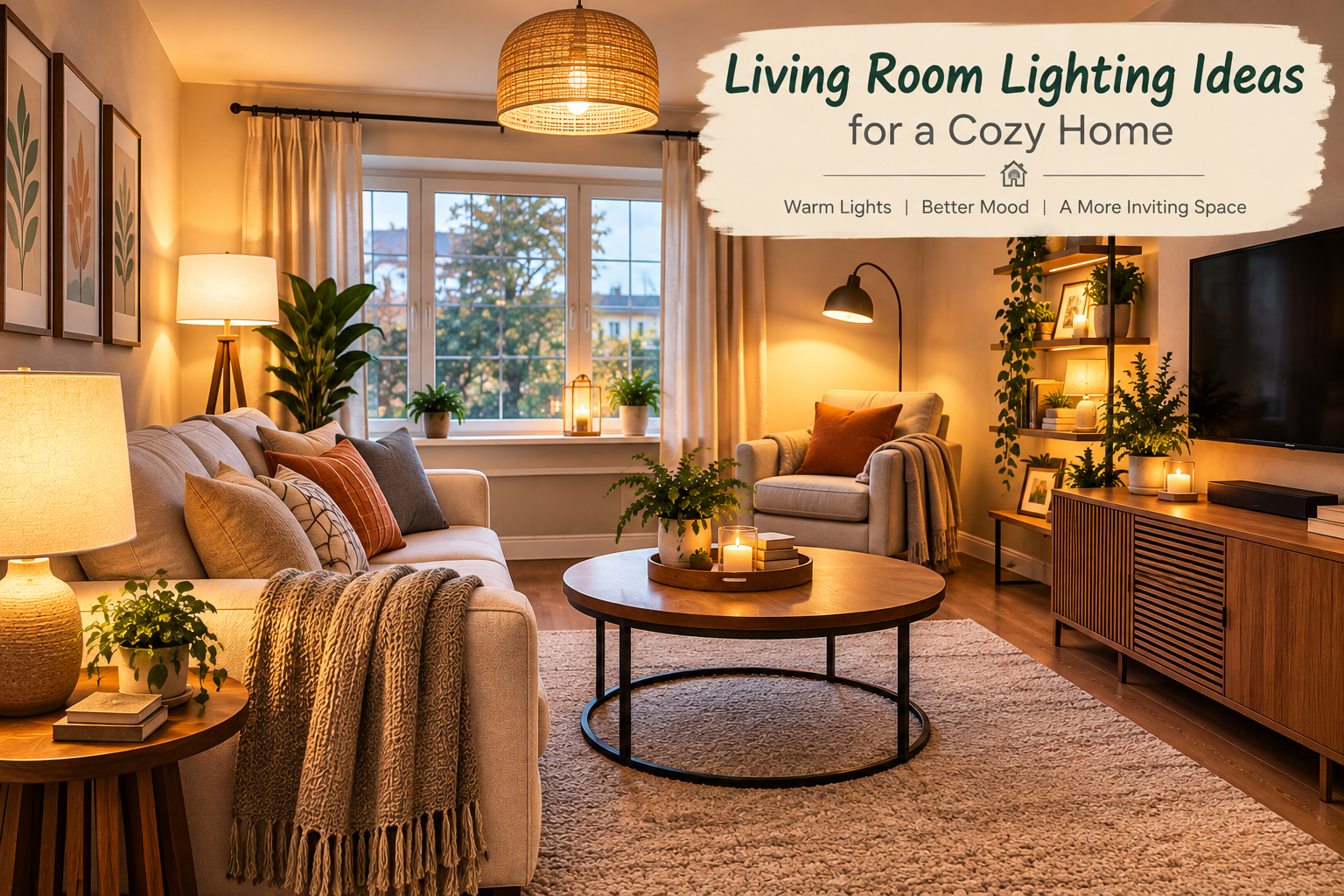
Living Room Lighting Ideas for a Cozy Home
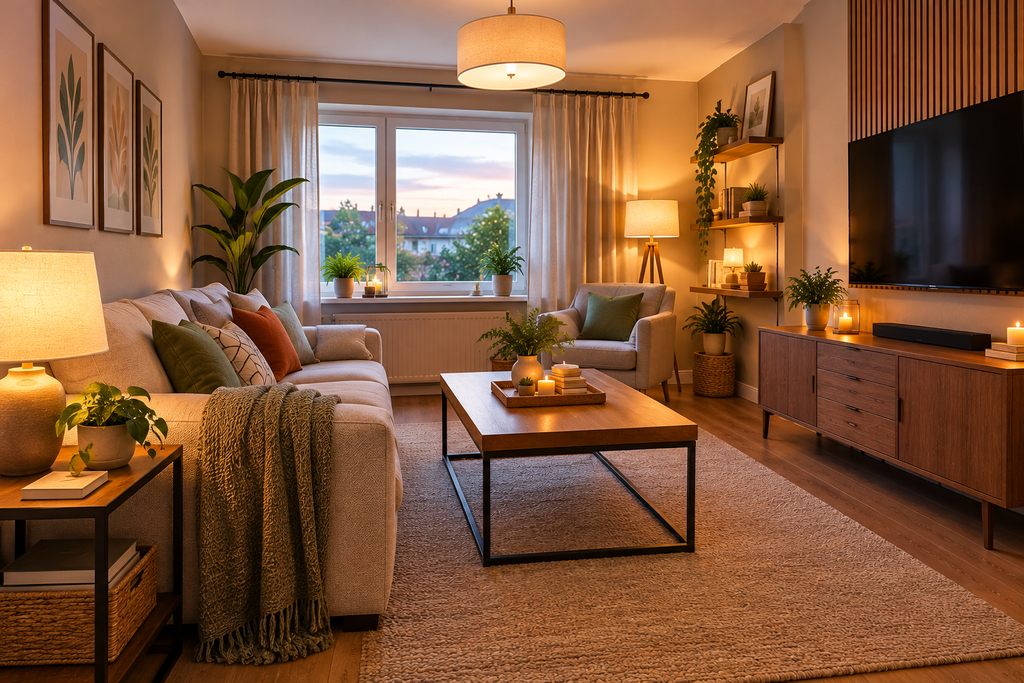
The right lighting can change how a living room looks and feels. A room that seems dull during the day or harsh in the evening may not need new furniture or expensive decorations. Sometimes, a few thoughtful lighting changes are enough to make the space feel warmer, more comfortable, and more inviting.
These living room lighting ideas will help you create a cozy atmosphere while making your room practical for everyday activities. Whether you have a small apartment, a spacious family living room, or a rented home where permanent changes are not possible, you can improve your lighting with simple, budget-friendly choices.
From warm table lamps to layered ceiling lights, there are many ways to make your living room feel balanced and welcoming. The key is to use different types of light for different purposes instead of relying on a single bright ceiling fixture.
1. Choose Warm Lighting for a Cozy Atmosphere
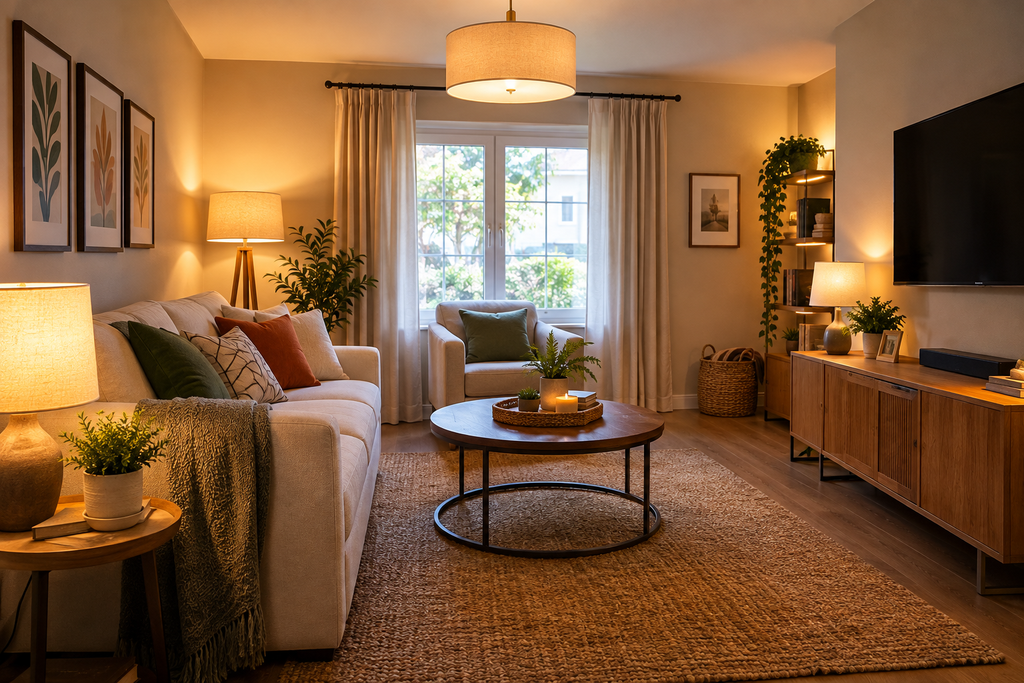
One of the easiest cozy living room lighting ideas is to choose light that feels comfortable rather than overly bright or cold.
Warm white bulbs often create a relaxed atmosphere that works well for evenings, conversations, and watching television. Cooler white lighting can be useful for tasks that require clearer visibility, but it may feel less relaxing when used throughout a room intended for unwinding.
When choosing bulbs, check the color temperature printed on the packaging. It is usually measured in kelvins (K). Around 2700K is a common starting point for warm, inviting living room lighting, although personal preference and the room’s colors can influence the result.
Try to keep the lighting in nearby areas reasonably coordinated. A very warm table lamp beside a noticeably cool ceiling light may create an uneven appearance.
Practical tip: If you are replacing several bulbs, compare their color temperatures before buying them. This helps create a more consistent look without requiring a complete lighting makeover.
2. Layer Different Types of Lighting
A comfortable living room usually benefits from more than one type of light. Layered lighting combines general illumination, task lighting, and accent lighting to support different activities and create visual depth.
Ambient lighting
Ambient lighting provides the room’s general illumination. It may come from a ceiling fixture, recessed lights, or light reflected from walls and ceilings.
Use it to make the room easy to navigate and comfortable for everyday activities. In a larger living room, more than one light source may be needed to avoid dark corners.
Task lighting
Task lighting helps you see clearly while doing something specific, such as reading, knitting, writing, or working on a laptop.
A floor lamp beside an armchair or a table lamp near a reading spot can provide light where you need it without making the entire room brighter.
Accent lighting
Accent lighting draws attention to selected features, such as artwork, shelving, plants, or an architectural detail.
A small lamp on a shelf or a suitable picture light can make a plain wall more interesting. Keep accent lights balanced with the room’s general lighting so the highlighted areas do not look disconnected from the rest of the space.
Combining these three layers is one of the most useful living room lighting design techniques because it gives you more control over the room’s mood and function.
3. Add Table Lamps for Soft Evening Light
Table lamps are an easy way to introduce softer light into a living room. They work especially well on side tables, console tables, and shelves that can safely support them.
Place a lamp beside a sofa or armchair to create a comfortable reading area. If your living room has a wide sideboard, a lamp can also help balance decorative objects and artwork.
The lamp’s size matters. A very large lamp may overwhelm a narrow table, while a tiny lamp may provide little useful illumination in a large seating area. Consider the height of nearby furniture and whether the shade directs light where you need it.
For warm living room lighting, choose a shade and bulb combination that produces a comfortable glow without shining directly into people’s eyes. Fabric shades can soften the appearance of a lamp, while glass or open shades may allow more light to spread around the room, depending on their design.
You do not need matching lamps on every surface. Two different lamps can work together when their finishes, shapes, or colors complement other elements in the room.
4. Use Floor Lamps to Brighten Dark Corners
Dark corners can make a living room feel less balanced, especially when the main ceiling light does not reach every part of the space.
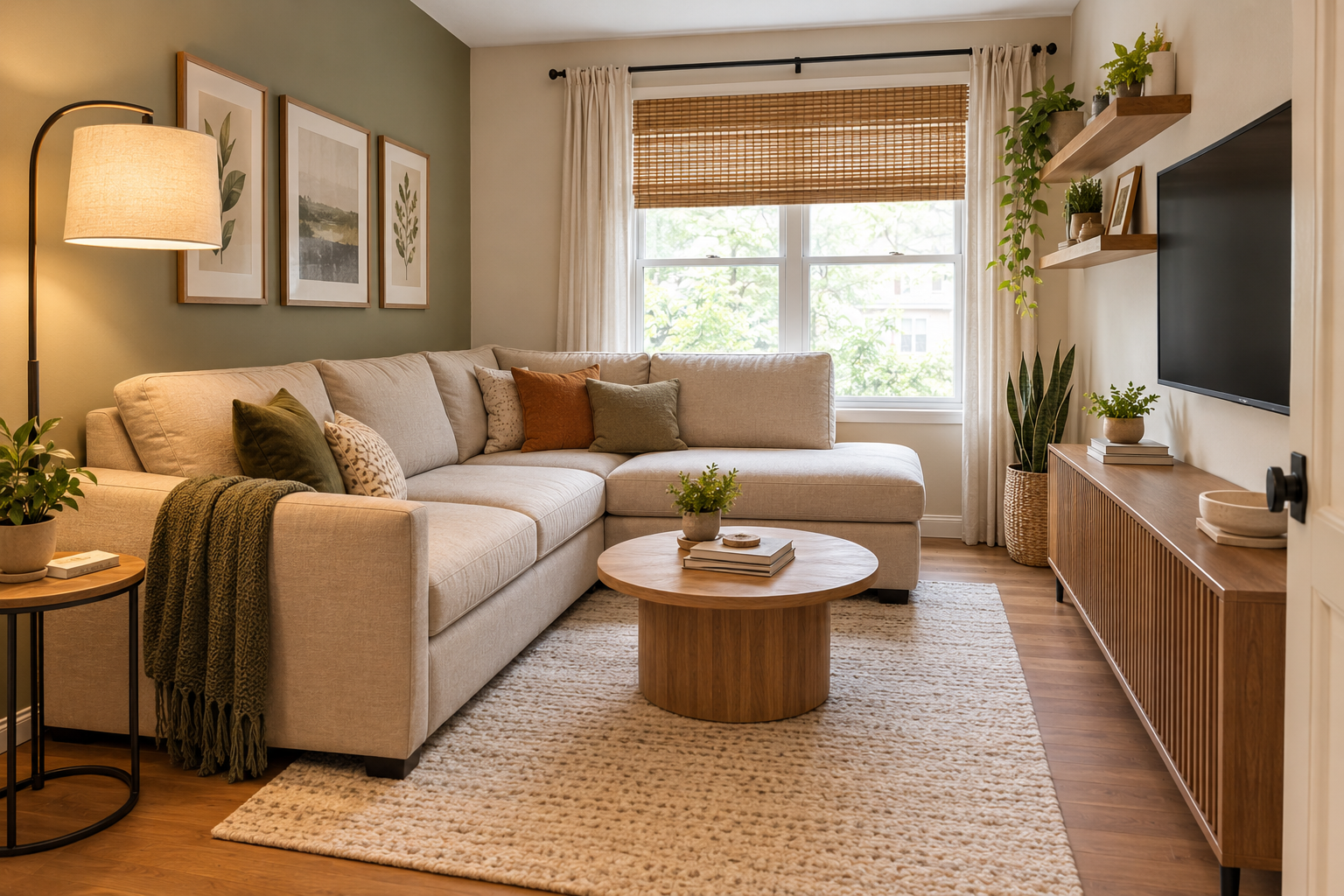
A floor lamp can brighten an unused corner, create a reading spot, or add height to a room with mostly low furniture. Arc lamps can extend light over a seating area, while slim floor lamps can fit beside a sofa without taking up much floor space.
If your living room is small, choose a design with a compact base and a shape that does not obstruct walking paths. In a larger room, a taller lamp with a broader shade may help fill an empty corner visually.
These small living room lighting ideas are particularly helpful when you want to improve the room without adding another large piece of furniture.
Before positioning a floor lamp, make sure it stands securely and that its cable does not create a tripping hazard. Keep it away from places where people regularly walk through the room.
5. Make the Most of Natural Light
Artificial lighting is important, but natural light can also make a living room feel brighter and more inviting during the day.
Start by checking whether heavy curtains, large decorative objects, or furniture are unnecessarily blocking the windows. Lightweight curtains can help soften daylight while allowing more light into the room.
If privacy is important, consider adjustable window coverings that let you control how much light enters. The best choice depends on your window direction, nearby buildings, and daily routine.
You can also position mirrors where they reflect daylight into a darker part of the room. The effect depends on the mirror’s placement and what it reflects, so experiment with the position before mounting it permanently.
For bright living room ideas, combine natural light with a simple color palette and avoid filling every window area with decorations. During the evening, use lamps to maintain a comfortable atmosphere after daylight fades.
6. Choose Ceiling Lights That Suit Your Room
Ceiling lights provide useful general illumination, but the fixture should suit the size, height, and style of the room.
A flush-mount ceiling light can be practical in a room with a low ceiling because it sits close to the ceiling surface. Pendant lights or chandeliers can become decorative focal points in rooms with sufficient ceiling height and suitable space.
For a small living room, avoid choosing a fixture that visually overwhelms the furniture or hangs too low over a main walking area. In a larger living room, a central fixture may need help from lamps or additional lighting points to reach the corners.
Think about how the room is used. If the living room doubles as a workspace or children’s play area, it may need more general illumination than a room mainly used for relaxing in the evening.
When considering new ceiling lights, remember that installation requirements vary. Electrical work, especially changes to fixed wiring, should be handled by a qualified professional where required.
7. Use Wall Lights to Save Space
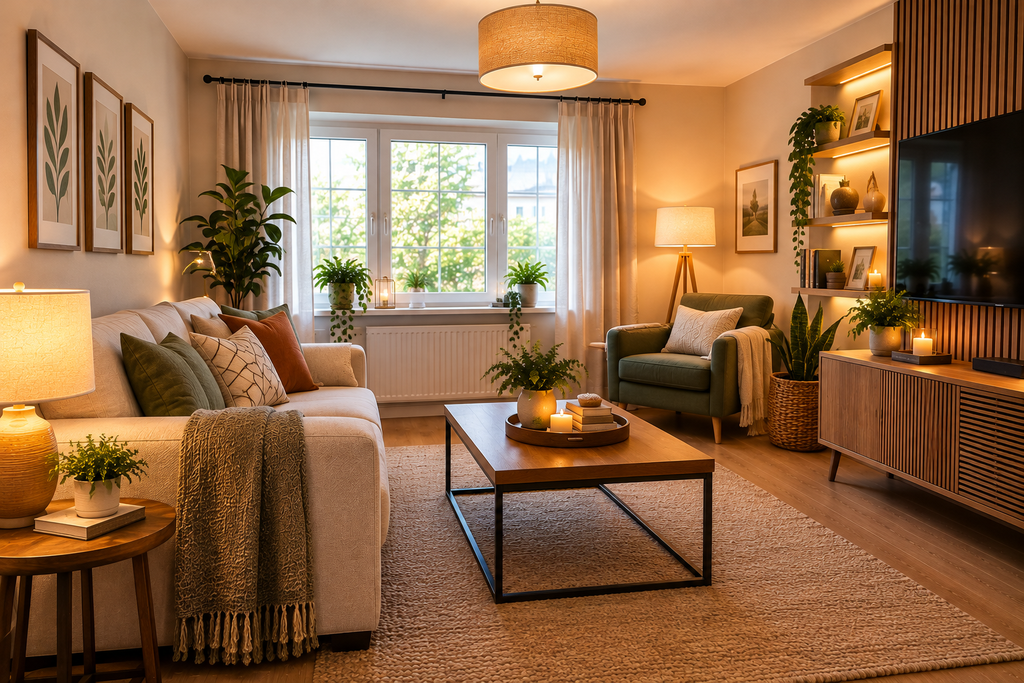
Wall lights can provide useful illumination without occupying a side table or taking up floor space. They are particularly practical in compact living rooms where every surface has a purpose.
Install or position wall lights near a reading chair, beside artwork, or along a wall that feels too dark. Depending on the fixture, light may shine upward, downward, or in both directions.
If you rent your home, plug-in wall lights may be an option when you want to avoid permanent wiring changes. Check your rental agreement and use appropriate mounting methods for the wall surface.
For space-saving living room lighting, look for fixtures that suit the room’s scale and do not protrude into narrow walkways. A pair of simple wall lights can also help create balance on either side of a focal point, such as a fireplace or large artwork.
8. Highlight Artwork, Shelves, and Decorative Details
Lighting can help draw attention to the parts of your living room that you want people to notice.
A picture light can highlight framed artwork, while a small lamp on a bookcase can create a warm glow around books and accessories. Some shelving arrangements also work well with discreet lighting designed for that purpose.
The goal is to highlight selected features rather than illuminate every object. Too many bright accent lights can make the room look busy and distract from the overall design.
When choosing accent lighting for a living room, consider the colors and finishes already present. Warm light may complement wood and earthy tones, while the best lighting for artwork depends on its colors, materials, and placement.
If you are lighting artwork or valuable decorative objects, check the fixture and light source specifications for suitability. Avoid assuming every bulb or fixture is appropriate for every material.
9. Use Dimmers to Adjust the Mood
A dimmer can make one lighting setup more flexible by allowing you to adjust brightness for different activities. Brighter light may be useful while cleaning or arranging the room, while lower light may feel more comfortable for a quiet evening.
Before purchasing a dimmer, check that it is compatible with your bulb, fixture, and electrical system. Not every LED bulb or lighting setup works with every dimmer.
If installing a dimmer is not practical, you can create a similar sense of flexibility by switching individual lamps on or off. For example, use general lighting when several people are in the room and rely on a table lamp and floor lamp when you want a softer atmosphere.
These living room lighting ideas for evenings help you adapt the room without changing its furniture or color scheme.
10. Match Lighting With Your Decorating Style
Lighting fixtures are functional items, but they can also contribute to your decorating style.
For a modern living room, consider simple shapes, clean lines, and understated finishes. A traditional space may suit fabric shades, classic metal finishes, or decorative table lamps. Natural materials and soft shapes can complement a relaxed, Scandinavian-inspired room.
Color also matters. Brass or warm metallic finishes can add visual warmth, while black fixtures may provide contrast against light walls. Wooden details can work well with neutral furniture and natural textures.
You do not need every fixture to match exactly. Instead, look for a connection between materials, shapes, or finishes so the room feels coordinated.
If you are decorating on a budget, keep existing fixtures that still work well and update smaller items first. Replacing a lampshade, choosing a suitable bulb, or adding one floor lamp may be enough to refresh the room.
11. Improve Small Living Rooms Without Adding Clutter
A small living room needs lighting that improves visibility without taking up too much space.
Choose slim floor lamps, compact table lamps, or suitable wall-mounted fixtures. If your side tables are already full, consider a lamp with a narrow footprint or a wall light that frees up the surface.
Avoid placing lamps where their shades block the view across the room or where people could easily knock them over. Keep cables organized and leave clear paths between seating, doors, and other frequently used areas.
A light-colored lampshade can blend easily with a neutral room, while a darker or more colorful shade can create a focal point. The right option depends on whether you want the lamp to stand out or feel subtle.
For cozy small living room lighting, start with the seating area. Add a reading lamp or table lamp there first, then check whether other corners need additional light. This approach helps you avoid buying fixtures you do not actually need.
Common Living Room Lighting Mistakes to Avoid
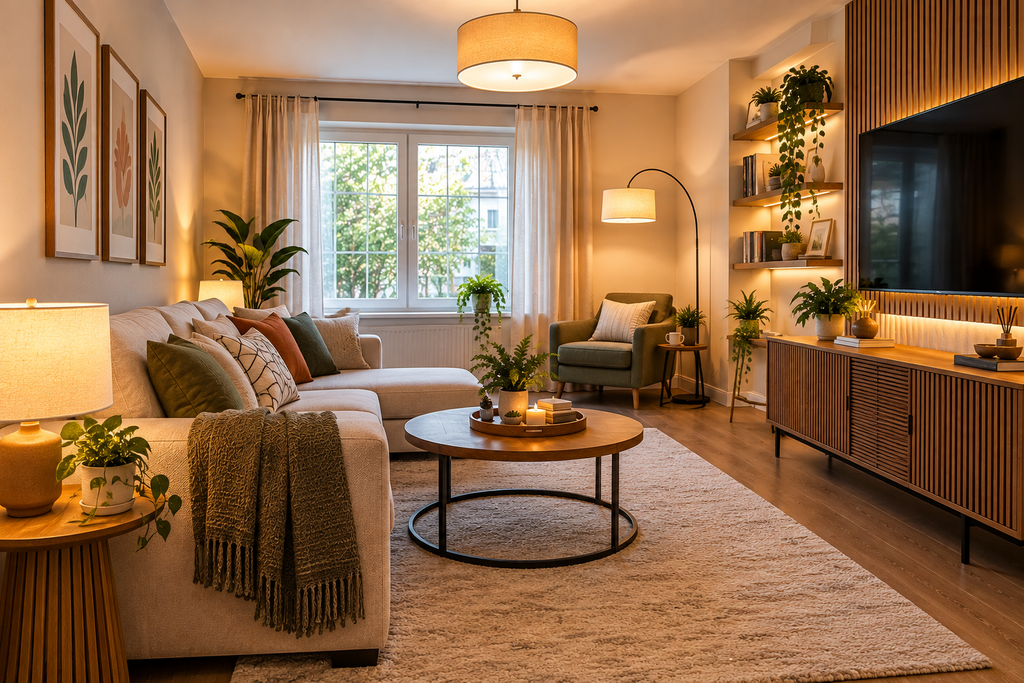
Even attractive fixtures can be less effective when they are used without considering the room’s needs.
- Relying on one ceiling light: A single source may leave corners and seating areas poorly lit. Add lamps where extra light is useful.
- Choosing bulbs that feel too harsh: Consider warmer color temperatures for relaxing spaces and test brightness before replacing every bulb.
- Ignoring the purpose of each area: A reading chair, television area, and general seating space may need different lighting.
- Using too many decorative lights: Too many competing light sources can make a room feel visually busy.
- Blocking natural light: Keep window areas as open as practical and use window coverings that suit your privacy needs.
- Forgetting cables and stability: Position lamps securely and keep cords away from common walking routes.
- Buying fixtures before measuring: Check table dimensions, ceiling height, and available space before choosing a lamp or ceiling fixture.
A simple lighting plan can help you avoid these mistakes and spend your budget where it makes the biggest difference.
Frequently Asked Questions
What is the best lighting for a cozy living room?
A combination of warm general lighting, table lamps, and floor lamps is a useful starting point. The best setup depends on room size, natural light, and how you use the space.
Which bulb color is best for living room lighting?
Warm white light is a common choice for a relaxed atmosphere. Around 2700K is a useful starting point, but you may prefer a slightly different color temperature depending on your decor and personal comfort.
How can I improve living room lighting on a budget?
Start by replacing unsuitable bulbs, repositioning existing lamps, and making better use of daylight. Add one affordable table or floor lamp if a particular area still needs more light.
How do I light a small living room?
Use compact lamps, keep walkways clear, and place light sources near areas where you read or relax. Wall lights may be useful when floor and table space is limited.
Are ceiling lights enough for a living room?
A ceiling light may provide general illumination, but additional lamps can make the room more comfortable for specific activities and help brighten darker corners.
How can renters improve living room lighting?
Renters can often use portable table lamps, floor lamps, and plug-in lighting options without making permanent changes. Check the rental agreement and product instructions before mounting or installing anything.
Final Thoughts
A cozy living room does not require expensive fixtures or a complete redesign. The most effective living room lighting ideas begin with understanding how you use the room and where additional light would be helpful.
Start with a comfortable bulb color, then combine general lighting with table lamps, floor lamps, or wall lights where appropriate. Make the most of daylight, keep the layout practical, and choose fixtures that complement your existing decor.
By making a few thoughtful changes, you can create warm living room lighting that supports everyday activities and makes your home feel more welcoming throughout the day and evening.

Leave a Reply